
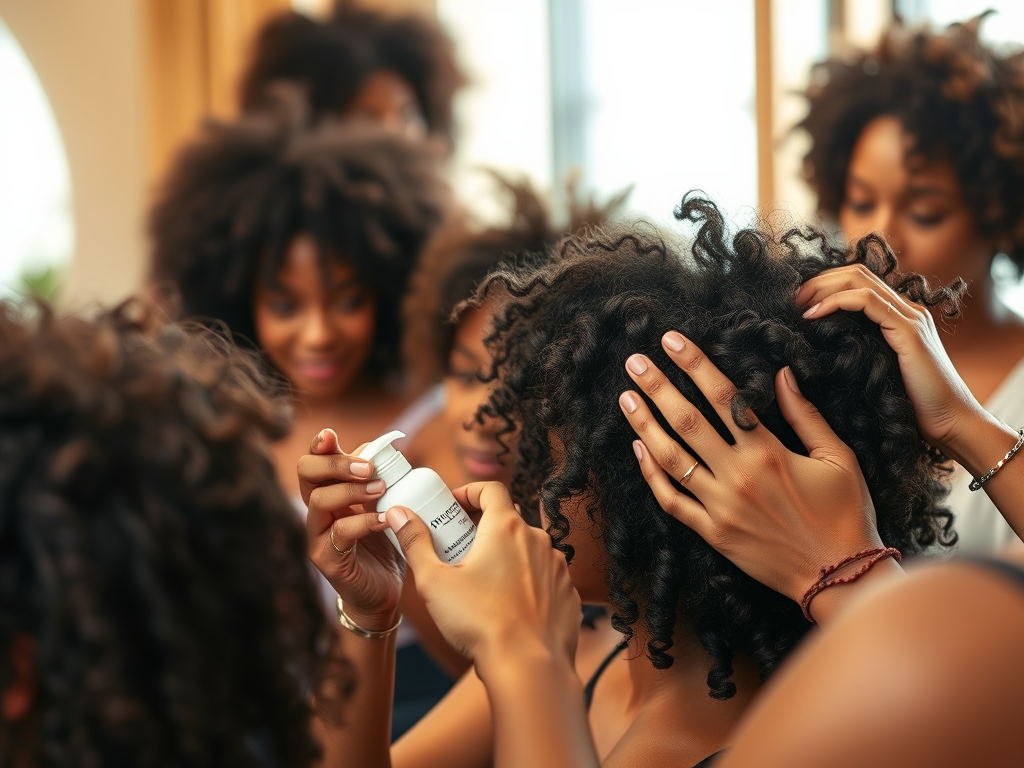
For years, curly-haired individuals were told their hair was “unmanageable,” “difficult,” or needed to be “tamed.” Countless people grew up fighting against their natural texture, armed with flat irons, chemical straighteners, and products designed for straight hair that left their curls dry, frizzy, and damaged. The message was clear: straight hair was the standard, and curls were a problem to be solved.
But here’s the liberating truth: there’s absolutely nothing wrong with curly hair. It’s not harder to manage—it just requires different care than straight hair. When you understand how curls work and what they need, caring for them becomes not only manageable but genuinely enjoyable. Your curls can be healthy, defined, bouncy, and absolutely gorgeous when given the right treatment.
The curly hair movement has revolutionized how we understand and care for textured hair. Methods like the Curly Girl Method, increased representation in the beauty industry, and growing scientific understanding of curl structure have empowered people to embrace their natural texture with confidence. We now know that curls aren’t a flaw to fix—they’re a beautiful feature to enhance and celebrate.
At Evelisse Beauty, we believe every hair type deserves products and knowledge specifically designed for its unique needs. Curly hair has distinct characteristics that require specialized care, from how you wash it to how you style and maintain it. This comprehensive guide covers everything you need to know about caring for curly hair—from understanding your specific curl type to building a routine that brings out your curls’ best qualities.
Whether you’re just beginning to embrace your natural texture, struggling with frizz and dryness, or simply want to take your curl care to the next level, this guide provides the knowledge and practical strategies to make your curly hair journey successful and rewarding.
Understanding Curly Hair: Why It’s Different
Before diving into care techniques, it’s essential to understand what makes curly hair unique and why it needs specialized attention.
The Structure of Curly Hair
Hair grows from follicles in your scalp. Straight hair grows from round follicles, allowing sebum (your scalp’s natural oil) to travel easily down the hair shaft, keeping it naturally moisturized. Curly hair grows from oval or asymmetrical follicles, creating the curl pattern as hair emerges.
This structural difference has significant implications: the twists and turns of curly hair make it harder for sebum to travel from scalp to ends, meaning curly hair is inherently drier than straight hair. The curl pattern also creates more opportunities for the hair cuticle (the outer protective layer) to lift, making curls more vulnerable to damage, frizz, and moisture loss.
Additionally, curly hair tends to have higher porosity—meaning the cuticle has more gaps that allow moisture to enter and escape quickly. This is why curly hair can feel dry shortly after moisturizing and why humidity causes such dramatic frizz.
Common Curly Hair Challenges
Understanding these challenges helps you address them effectively:
Dryness: The number one issue for curly hair. Without proper moisture, curls become brittle, frizzy, and lose definition.
Frizz: Caused by moisture imbalance—either too little moisture in the hair or too much humidity in the air causing hair to absorb water and swell.
Tangles and knots: Curls naturally wrap around each other, creating tangles. Dry, damaged curls tangle even more severely.
Lack of definition: Without proper technique and products, curls can look shapeless rather than forming distinct, bouncy spirals.
Breakage: Dry, fragile curly hair breaks more easily, especially when handled roughly or styled with heat.
Uneven curl pattern: Many people have multiple curl patterns on different parts of their head, requiring adaptable techniques.
The good news? All these challenges are manageable with the right approach.
Identifying Your Curl Type
Curls exist on a spectrum, and understanding your specific curl type helps you choose appropriate products and techniques.
The Curl Type System
The most widely used classification system identifies curl types from 2 (wavy) to 4 (coily), with subcategories A, B, and C indicating the tightness of the pattern.
Type 2 (Wavy): Forms an S-shape but doesn’t spiral. 2A is fine and barely wavy, 2B has more defined waves with some frizz, and 2C has well-defined waves that start at the roots with potential frizz.
Type 3 (Curly): Forms definite spiral curls. 3A has large, loose curls about the width of sidewalk chalk, 3B has springy ringlets about the width of a marker, and 3C has tight corkscrew curls about the width of a pencil or straw.
Type 4 (Coily/Kinky): Forms very tight curls or zigzag patterns. 4A has tightly coiled S-pattern curls, 4B has sharp-angled Z-pattern coils, and 4C has the tightest coils with minimal definition and significant shrinkage.
Beyond the Numbers
While this system is helpful, remember that most people have multiple curl patterns on their head. Your crown might be 3B while your underneath layers are 3A. The nape of your neck might have tighter coils than the rest of your head. This is completely normal.
Additionally, consider these factors:
Porosity: How well your hair absorbs and retains moisture. Low porosity hair resists moisture but retains it well once absorbed. High porosity hair absorbs quickly but loses moisture easily. Medium porosity is the easiest to maintain.
Density: How many hair strands you have per square inch. Low, medium, or high density affects how much product you need.
Strand thickness: Fine, medium, or coarse individual strands determine how products affect your hair and what techniques work best.
Understanding all these characteristics helps you customize care rather than following a one-size-fits-all approach.
The Curly Girl Method: Revolutionary Principles
The Curly Girl Method, developed by Lorraine Massey and popularized in her book “Curly Girl: The Handbook,” revolutionized curly hair care with principles that work for most curl types.
Core Principles
No sulfates: Harsh sulfate cleansers strip natural oils, leaving curly hair dry. Use gentle, sulfate-free cleansers or co-wash (washing with conditioner only).
No silicones: Most silicones require sulfates for removal, creating a cycle of stripping and coating. Water-soluble silicones are sometimes acceptable.
No heat styling: Heat damages the curl pattern and dries hair. Embrace air-drying or use diffusers on low heat.
No brushes when dry: Brushing dry curls destroys curl clumps and creates frizz. Detangle only when wet with conditioner.
Lots of moisture: Curly hair needs constant hydration through leave-in conditioners, curl creams, and deep conditioning treatments.
Gentle handling: Avoid rough towel-drying, aggressive scrubbing, or any manipulation that disrupts curl formation.
Is CGM Right for You?
The Curly Girl Method works beautifully for many people, particularly those with types 2C through 4A. However, it’s not dogma—it’s a starting point you can adapt.
Some people find strict CGM too restrictive or that certain “forbidden” ingredients actually work well for their hair. Others with very fine or low-porosity hair find CGM products too heavy. Listen to your hair and adjust accordingly.
Building Your Curly Hair Care Routine
A successful curly hair routine addresses cleansing, conditioning, styling, and maintenance. Here’s how to structure each component.
Cleansing: Getting Clean Without Stripping
Co-washing: Using conditioner to cleanse is gentle and maintains moisture. Massage a cleansing conditioner into your scalp, focusing on the roots where oil and buildup accumulate. Rinse thoroughly. Co-washing works well for most curl types 2-3 times weekly.
Low-poo: Sulfate-free shampoos cleanse more thoroughly than co-washing without harsh stripping. Use these 1-2 times weekly or when you need deeper cleansing (after heavy product use, swimming, or buildup).
Clarifying: Even with gentle cleansing, product and mineral buildup occurs. Use a clarifying shampoo once monthly to reset your hair. Follow immediately with deep conditioning to restore moisture.
Scalp care: Healthy hair starts with a healthy scalp. Massage your scalp while cleansing to stimulate circulation. If you experience dryness, itching, or flaking, address scalp health specifically with treatments or oils.
Water temperature: Wash with lukewarm water and rinse with cool water. Hot water opens the cuticle (causing frizz), while cool water seals it (promoting shine).
Conditioning: The Foundation of Healthy Curls
Regular conditioning: After every cleanse, apply generous amounts of conditioner from mid-length to ends (avoiding roots to prevent greasiness). Let it sit for at least 3-5 minutes. Use this time to detangle with your fingers or a wide-tooth comb, starting from ends and working up.
Squish to condish: While rinsing, “squish” water and conditioner into your hair by cupping sections and pushing them up toward your scalp. This encourages curl formation and helps hair absorb maximum moisture. Rinse most but not all conditioner—leaving a bit in provides extra moisture.
Deep conditioning: Once weekly, use a deep conditioning mask or treatment. Apply to clean, damp hair, cover with a shower cap, and leave for 20-30 minutes (or longer—some people sleep in deep conditioners). Heat helps penetration—sit in the sun, use a warm towel, or wear a shower cap.
Protein treatments: Every 4-6 weeks (or more frequently if your hair is damaged), use a protein treatment to strengthen hair structure. Signs you need protein include excessive stretchiness, limpness, or lack of curl definition. Don’t overdo protein—too much makes hair brittle.
Leave-in conditioner: After showering, apply a leave-in conditioner to soaking wet hair. This is the foundation of your styling routine and provides all-day moisture.
Styling: Defining and Setting Your Curls
Apply products to soaking wet hair: This is crucial. Wet hair clumps together naturally, forming curl families. Products applied to wet hair seal in moisture and define these natural groupings.
Layering technique: Apply products in order of thickness—thinnest to thickest:
- Leave-in conditioner
- Curl cream or milk
- Gel or mousse (for hold)
Application methods:
Praying hands: Smooth product down the hair shaft with both hands pressed together around sections of hair. This encourages clumping and reduces frizz.
Scrunching: Cup sections of hair in your palm and gently squeeze upward toward your scalp. This encourages curl formation and helps product penetrate.
Rake and shake: For looser curl types, rake fingers through sections to distribute product, then shake to encourage curl formation.
Brush styling: Some people achieve better definition by applying products with a denman brush or wet brush, using small sections and brushing downward to create curl clumps.
Microplopping: Use a microfiber towel or cotton t-shirt to gently scrunch excess water and product, encouraging curl formation without creating frizz.
Don’t touch while drying: Once you’ve styled, leave your hair alone. Touching disrupts curl formation and creates frizz. Let it dry completely undisturbed.
Drying: Patience and Technique
Air drying: The gentlest method. After styling, simply let hair dry naturally. This works well for looser curl types or when you have time.
Plopping: Lay a t-shirt or microfiber towel flat, flip hair onto it, and wrap it up on top of your head for 15-30 minutes. This absorbs excess moisture while maintaining curl definition.
Diffusing: Attach a diffuser to your hair dryer and use low heat, low speed. Cup sections of hair in the diffuser bowl and hold in place rather than moving it around. Diffuse until 80-90% dry, then let air-dry completely. This speeds drying while enhancing volume and definition.
SOTC (Scrunch Out The Crunch): If you used gel, your hair will dry crunchy. Once completely dry, scrunch gently to break the gel cast, revealing soft, defined curls with lasting hold.
Day-to-Day Curl Maintenance
How you care for your curls between wash days dramatically affects their health and appearance.
Nighttime Protection
Pineappling: Gather all hair loosely on top of your head in a very high, loose ponytail using a silk or satin scrunchie. This protects curls while you sleep.
Silk or satin pillowcase: Cotton absorbs moisture and creates friction, causing frizz and breakage. Silk or satin preserves moisture and allows hair to glide smoothly.
Silk/satin bonnet or scarf: For maximum protection, cover your hair completely with a silk or satin bonnet.
Medusa clipping: For shorter hair or looser curls, use small clips to pin sections up and away from your face, maintaining volume and definition.
Refreshing Between Washes
Most curly-haired people wash 1-3 times weekly, refreshing curls on other days.
Light refresh: Lightly mist hair with water or a water-diluted leave-in conditioner. Scrunch to reactivate products and redefine curls.
Full refresh: Thoroughly wet hair with water or a curl refresher spray. Apply a small amount of gel or curl cream. Scrunch and allow to dry or diffuse briefly.
Spot treating: Address only the sections that need help—typically the crown, front, or wherever you slept on your hair—leaving intact curls alone.
Avoiding over-manipulation: The more you touch and restyle, the more frizz you create. Refresh only when necessary.
Protecting Your Curls Throughout the Day
Avoid touching: Hands in hair = frizz. Resist the urge to play with, scrunch, or arrange your curls constantly.
Weather protection: In rain or high humidity, use anti-humidity products with hold. In dry weather, refresh with moisture as needed.
Exercise and sweat: Pull hair up before exercise. Afterward, you can refresh or wash depending on how much you sweated.
Swimming: Wet hair with clean water before entering pools or ocean (saturated hair absorbs less chlorine or salt). Wear a swim cap if possible. Immediately rinse, cleanse, and condition after swimming.
Product Selection: Choosing What Works
The curly hair market is vast and can be overwhelming. Here’s how to navigate it.
Reading Ingredients
Beneficial ingredients for curls:
- Humectants (glycerin, honey, aloe vera) attract moisture
- Emollients (shea butter, oils) soften and smooth
- Proteins (keratin, silk, wheat) strengthen hair structure
- Botanical extracts provide vitamins and antioxidants
Ingredients to avoid (generally):
- Sulfates (SLS, SLES) – harsh cleansers
- Drying alcohols (denatured alcohol, SD alcohol) – though fatty alcohols (cetyl, stearyl) are beneficial
- Non-water-soluble silicones (dimethicone, amodimethicone) unless using sulfates
- Waxes and mineral oil (can cause buildup)
Climate considerations: In humid weather, use less glycerin (which attracts environmental moisture, causing frizz). In dry weather, increase humectants and emollients.
Building Your Product Arsenal
Essential products:
- Gentle cleanser (co-wash or low-poo)
- Regular conditioner
- Deep conditioner/mask
- Leave-in conditioner
- Curl cream or styling product
- Gel (for hold)
Optional but helpful:
- Clarifying shampoo
- Protein treatment
- Curl refresher spray
- Hair oil or serum
- Mousse (alternative to gel)
Budget-Friendly Options
Effective curl care doesn’t require expensive products. Many drugstore brands offer excellent options: affordable conditioners for co-washing, gel from general brands often works beautifully, and DIY deep conditioning with natural oils (coconut, olive) is highly effective.
Invest in leave-in conditioner and one excellent styling product, saving on cleansers and basic conditioners.
Experimentation and Patience
Finding perfect products takes trial and error. What works for someone with your curl type might not work for you due to porosity, climate, or product combinations.
Buy small sizes when trying new products. Give each new product at least 2-3 uses before judging—sometimes hair needs time to adjust. Keep notes about what works and what doesn’t.
Common Curly Hair Problems and Solutions
Even with good routines, curly hair presents challenges. Here’s how to troubleshoot.
Frizz
Causes: Dryness, humidity, damaged cuticle, touching hair when dry, harsh towels or brushing.
Solutions: Increase moisture with leave-ins and deep conditioning. Use anti-humidity products in damp weather. Apply products to soaking wet hair. Use gel for hold that seals the cuticle. Avoid touching hair when dry. Use microfiber towels or t-shirts only.
Lack of Definition
Causes: Insufficient moisture, wrong products, poor styling technique, product buildup, damaged hair.
Solutions: Ensure hair is soaking wet when applying products. Use curl creams designed for your curl type. Master styling techniques like scrunching or brush styling. Clarify to remove buildup. Get regular trims to remove damaged ends. Try protein treatments if curls are limp.
Dryness
Causes: Inherent curl structure, low porosity, insufficient conditioning, harsh products, environmental factors.
Solutions: Deep condition weekly. Use richer, creamier products. Add hair oil to your routine. Drink plenty of water. Use leave-in conditioner daily. Consider the LOC method (liquid, oil, cream) for layering moisture.
Tangles and Knots
Causes: Dry hair, fine hair, high density, single-strand knots (fairy knots), infrequent detangling.
Solutions: Detangle only when wet with plenty of conditioner. Use a wide-tooth comb or detangling brush. Work from ends up to roots. Finger detangle gently. Keep hair moisturized. Trim regularly to prevent fairy knots. Protective styles reduce tangling.
Flat Roots or Lack of Volume
Causes: Heavy products, applying products to roots, low-porosity hair, hair weight.
Solutions: Apply styling products only from mid-length down. Use lighter products or less product overall. Diffuse upside down. Clip roots while drying for lift. Try a volumizing mousse at roots only.
Uneven Curl Pattern
Causes: This is completely normal—most people have varying curl patterns.
Solutions: Customize technique by section—use more product on drier areas, different styling methods for different curl tightnesses. Embrace the variation as part of your unique texture. If certain areas are damaged, focus deep conditioning there.
Heat, Color, and Chemical Treatments
Curly hair requires special considerations when using heat or chemicals.
Heat Styling
Frequent heat use damages the curl pattern, sometimes permanently. If you occasionally want to straighten or use heat:
Always use heat protectant: This is non-negotiable. Apply generous amounts to protect hair structure.
Use lowest effective temperature: Start low and increase only if needed. Curly hair straightens at lower temps than straight hair requires.
Deep condition before and after: Intensive moisture helps prevent damage and restore health.
Limit frequency: Save heat styling for special occasions rather than regular use.
Expect texture changes: Frequent heat can permanently alter curl pattern. “Heat training” isn’t a thing—it’s damage that loosens curls.
Hair Color
Coloring can enhance curls beautifully but requires careful approach:
Choose color wisely: Highlights or balayage cause less damage than full-color since they don’t touch roots. Semi-permanent color is gentler than permanent. Avoid bleach if possible—it’s most damaging, especially for tight curls.
Professional application: For significant color changes, see a curl specialist. They understand how color affects texture and porosity.
Increase moisture: Colored hair is more porous and needs extra conditioning. Use color-safe, sulfate-free products. Deep condition more frequently—perhaps twice weekly.
Protein treatments: Color-treated hair often needs protein to maintain strength and structure.
Refresh carefully: Use products designed for colored hair to prevent fading. Limit clarifying to preserve color.
Chemical Treatments
Relaxers permanently alter curl structure by breaking bonds in the hair shaft. This process is irreversible and can cause significant damage if not done correctly. If you choose relaxers, seek experienced professionals and understand the commitment to maintenance and potential damage.
Keratin treatments temporarily smooth texture for several months. They contain formaldehyde or similar chemicals and require heat. Results vary—some people love them; others find curls permanently loosened.
Before any chemical treatment, research thoroughly, consult professionals experienced with curly hair, and understand that you’re trading curl pattern for manageability. There’s no judgment—it’s your hair—but make informed decisions.
Embracing Your Natural Texture
Beyond techniques and products, successfully caring for curly hair often requires a mental shift.
Letting Go of Comparison
Every head of curls is unique. Your friend’s 3B curls won’t behave like yours even if you have the same curl type. Social media shows highlight reels, not reality—those perfect curl photos often took multiple attempts, specific lighting, and strategic angles.
Focus on your hair’s health and progress rather than achieving someone else’s exact curl pattern.
Accepting “Bad Hair Days”
Even with perfect routines, some days your curls won’t cooperate. Weather, hormones, water quality when traveling, stress, and countless factors affect curl behavior.
Have backup styles for difficult days: elegant buns, braids, half-up styles, or accessories like scarves or headbands. It’s okay to not have perfect curls every single day.
The Journey, Not Destination
Healthy curls are a process, not a quick fix. It may take months to reverse years of damage or find your perfect product combination. Be patient with yourself and your hair.
Celebrate small victories: less frizz than last month, a new product that works, mastering a styling technique, or simply feeling more confident in your natural texture.
Community and Support
The curly hair community is welcoming and supportive. Online groups, forums, and social media communities offer troubleshooting help, product recommendations, and encouragement.
Connecting with others who understand curly hair struggles and successes makes the journey more enjoyable and less isolating.
Your Curly Hair Journey Starts Now
Caring for curly hair doesn’t have to be complicated, expensive, or frustrating. With understanding of how curls work, appropriate products, gentle techniques, and patience, your hair can be healthy, defined, and absolutely beautiful.
Start with the basics: gentle cleansing, generous conditioning, products applied to wet hair, and minimal manipulation. Build from there based on your specific needs and experiences.
Most importantly, remember that your curls are not a problem to solve—they’re a feature to celebrate. The goal isn’t perfect curls by some arbitrary standard; it’s healthy hair that makes you feel confident and comfortable.
At Evelisse Beauty, we’re committed to supporting your curly hair journey with products specifically designed for textured hair’s unique needs. Explore our collection and discover what your curls can truly become when given the care they deserve.
Your curls are beautiful. It’s time to treat them that way.